


Table of Contents
Do African elephants (Loxodonta africana) show complex social learning, and how does that affect their conservation?
African elephants are large-brained, long-lived mammals whose behaviour and population dynamics are shaped by cultural transmission and strong social bonds. This article summarizes current knowledge of their taxonomy, anatomy, behaviour, ecology, threats, and conservation, with clear metrics, case examples, and practical points useful for students and educators.
Species overview
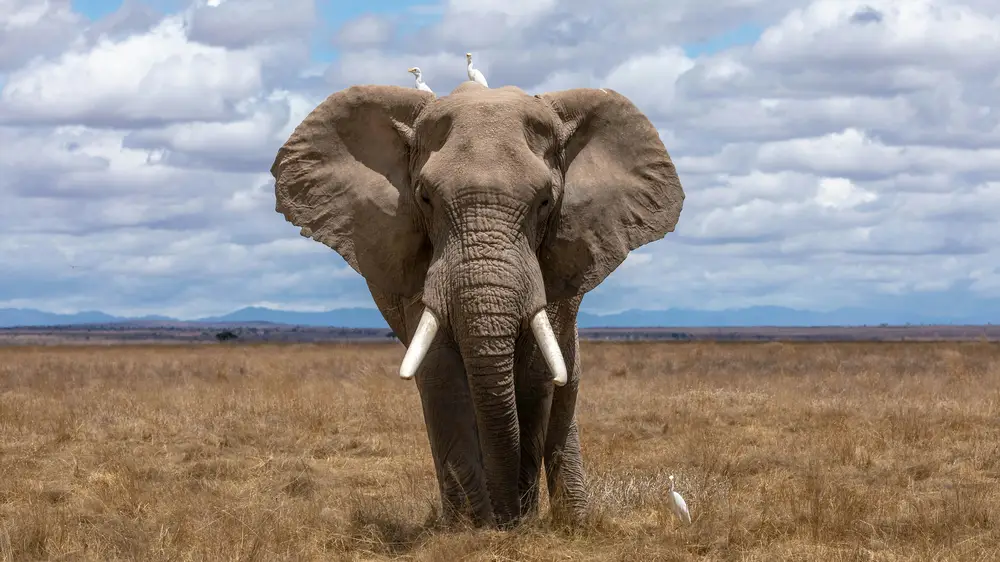
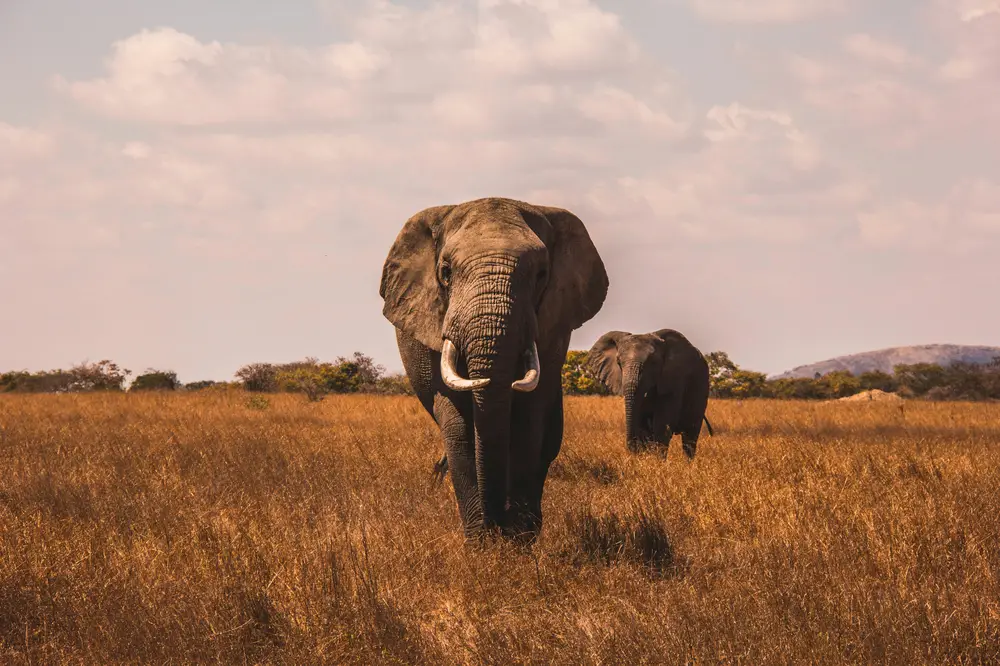
African elephants (Loxodonta africana) are among the largest terrestrial mammals. Adult males (bulls) commonly reach 3.0–3.5 m (9.8–11.5 ft) at the shoulder and typically weigh 4,000–6,000 kg (8,800–13,200 lb); adult females are smaller, often 2.6–3.2 m (8.5–10.5 ft) and 2,500–3,500 kg (5,500–7,700 lb). Geographic variation is pronounced: savannah (bush) elephants inhabit open grasslands and woodlands, while forest elephants occupy dense rainforest and have smaller stature and different tusk morphology.
Range and status: Historically widespread across sub-Saharan Africa, extant populations are now fragmented. Strongholds include parts of southern Africa (Botswana, Namibia), East Africa (Tanzania, Kenya), and selected West and Central African reserves. Regional status varies: some populations have stabilised or increased under targeted management, while others have declined sharply due to poaching and habitat loss.
Taxonomy note: The genus Loxodonta contains populations conventionally grouped under L. africana; some authorities recognise a forest form (L. cyclotis) as distinct. For the purposes of broad ecological and conservation discussion, this article uses the name Loxodonta africana while noting important regional differences where relevant.
Anatomy and key adaptations
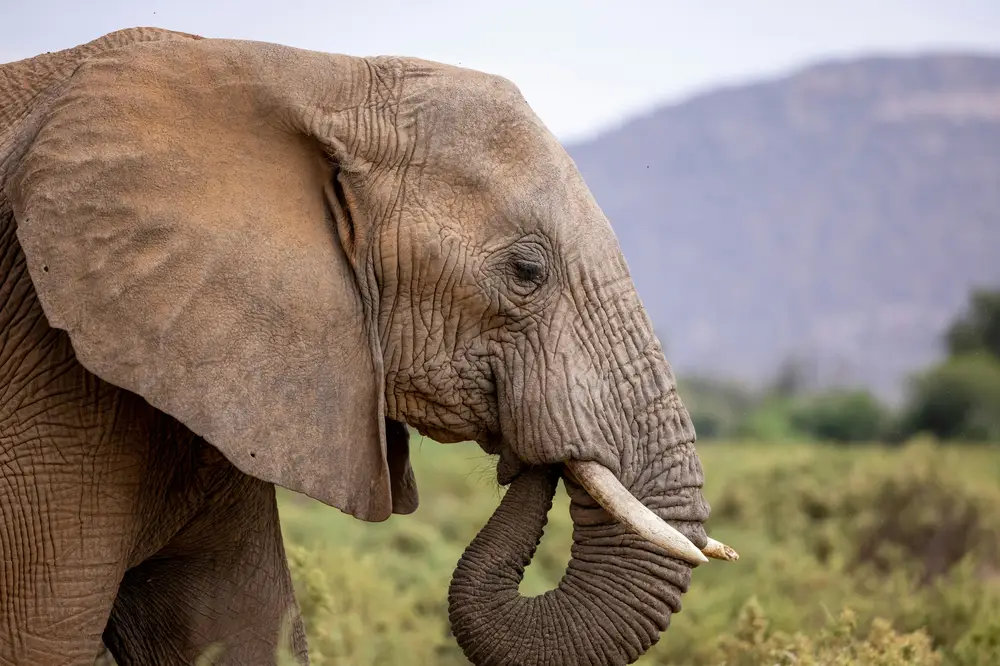
- Tusks: modified upper incisors made of dentine (ivory). Tusks vary by sex and population; in many savannah populations, males have larger tusks. Tusk size distributions are monitored as an indicator of selective poaching: loss of large-tusked individuals can shift population structure.
- Trunk: a muscular fusion of nose and upper lip containing ~40,000–60,000 muscle fascicles that enable manipulation from delicate grasping to powerful lifting.
- Dental and digestive adaptations: elephants have molar replacement across life and a hindgut fermentation system that processes large volumes of low-quality vegetation.
- Thermoregulation: large ears with extensive vascular networks dissipate heat; behavioural adaptations (mud baths, shade use) complement physiological traits.
- GPS collars: provide fine-scale movement paths, daily displacement, and seasonal range data.
- Acoustic monitoring: infrasound and call detection help infer presence and social behaviour remotely.
- Non-invasive genetics (dung DNA): used to estimate population size, relatedness, and sex ratios.
- Illegal killing for ivory: drives selective removal of large-tusked individuals and disrupts demography.
- Habitat loss and fragmentation: agriculture, fencing, and infrastructure impede movement and reduce available habitat.
- Human-elephant conflict: crop-raiding and property damage lead to retaliatory actions and can erode local support for conservation.
- Climate variability: extended droughts concentrate elephants and reduce forage, increasing mortality and conflicts.
- Preserve and connect habitat via corridors and transboundary areas to maintain migration routes and gene flow.
- Anti-poaching patrols paired with intelligence-led enforcement to disrupt illegal trade.
- Community-centred programs that share economic benefits and implement early-warning and deterrence measures to reduce crop-raiding.
- Demand reduction and legal frameworks to reduce ivory markets.
- Calf recruitment rate (calves per adult female per year)
- Adult sex ratios and age structure
- Mortality rates and cause-specific mortality (poaching vs. natural)
- Movement metrics: home range, displacement, and corridor use
- Tusk-size distribution as a proxy for selective pressure from poaching
Functional roles: As mega-herbivores, elephants shape vegetation structure, disperse seeds, and create water-access features used by other species — traits that make them ecosystem engineers and keystone species.
Diet and foraging ecology
African elephants are generalist herbivores. Savannah elephants feed on grasses, browse, bark, and fruit; forest elephants take a higher proportion of fruit and browse. Daily intake for adults can range from ~150–300 kg (330–660 lb) of plant material, depending on season and digestive efficiency. Foraging behaviour varies seasonally: during wet seasons elephants may feed more on grasses; in dry seasons they increase bark and browse consumption, which can alter tree demography over time.
For students: simple field metrics include bite rate, feeding time percentage, and dung count surveys to estimate local density and diet composition.
Behavior, social structure, and social learning
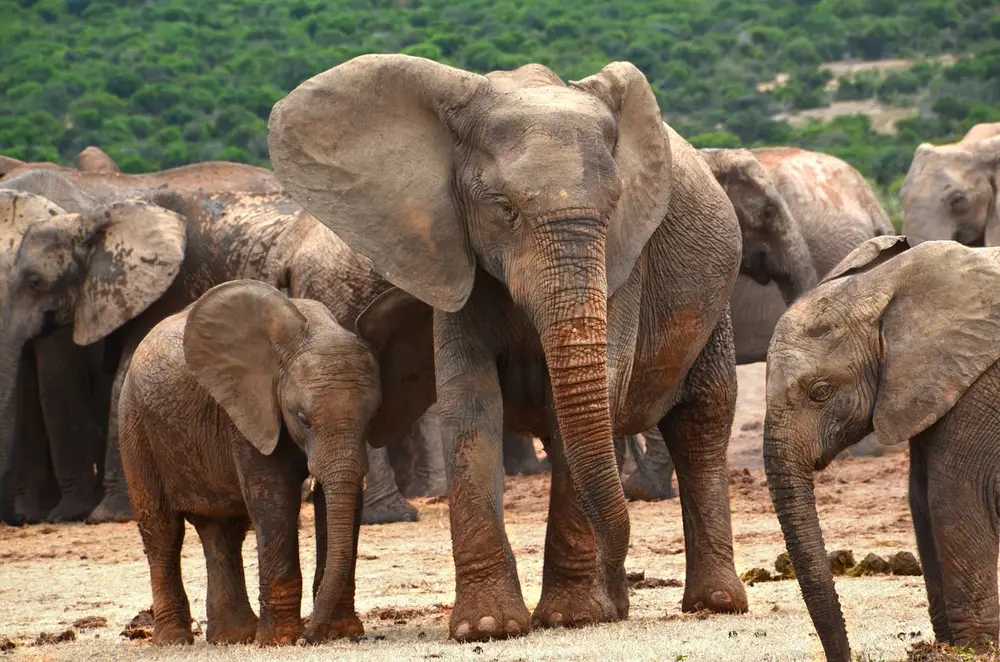
Social structure: Elephant societies are multi-tiered. Typical units are small family groups of related adult females led by a persistent matriarch; multiple related families can form larger clans and aggregate seasonally. Males disperse at adolescence and may join loose bachelor groups or remain solitary.
Communication: Elephants use a range of signals: low-frequency infrasound, broadband calls, tactile contacts, chemical cues, and visual displays. Infrasound can propagate over several kilometres and is important for long-distance coordination.
Social learning: Empirical studies show juvenile and subadult elephants acquire knowledge from older group members. Learned behaviours include migration routes, location of perennial water sources, predator avoidance strategies, and responses to humans. Matriarchal knowledge — especially that of older females — often correlates with group survival during environmental stress.
Conservation implication: Removing experienced adults (e.g., through selective poaching) can disrupt knowledge transmission and reduce population resilience. Management interventions such as translocations should consider social composition to avoid eroding culturally transmitted knowledge.
For accessible examples, see our related post: The Secret Lives of Elephants: 10 Interesting Behaviors Revealed.
Movement, home ranges, and monitoring
Home-range size varies with habitat productivity and human pressures: in productive savannahs ranges may be smaller, while in arid or highly fragmented landscapes, elephants travel tens to hundreds of kilometres to meet water and forage needs. Modern monitoring tools include:
Students can engage with open datasets from research projects to analyse movement metrics such as net displacement, utilization distributions, and habitat selection.
Threats and human dimensions
Primary threats:
Socioeconomic dimensions: Effective mitigation often combines law enforcement with community incentives (benefit-sharing, employment, ecotourism revenue), landscape planning to reduce conflict, and education.
Conservation strategies and case studies
Evidence-based strategies:
Case example: In southern Africa, coordinated anti-poaching combined with community engagement and targeted monitoring (GPS + genetic surveys) has stabilised some populations. Adaptive management using monitored indicators (calf recruitment, mortality, tusk-size trends) allows rapid response to emerging threats.
Research, metrics, and how educators can use them
Key metrics for monitoring:
Classroom exercises: students can map hypothetical movement corridors, calculate simple population growth models using given recruitment and mortality rates, or interpret simplified telemetry datasets.
Conclusion
Social learning and intergenerational knowledge are central to African elephant ecology. Conservation interventions that preserve social networks, maintain habitat connectivity, reduce poaching pressure, and involve local communities produce the best outcomes for long-term persistence. Integrating monitoring metrics into management supports adaptive decision-making.
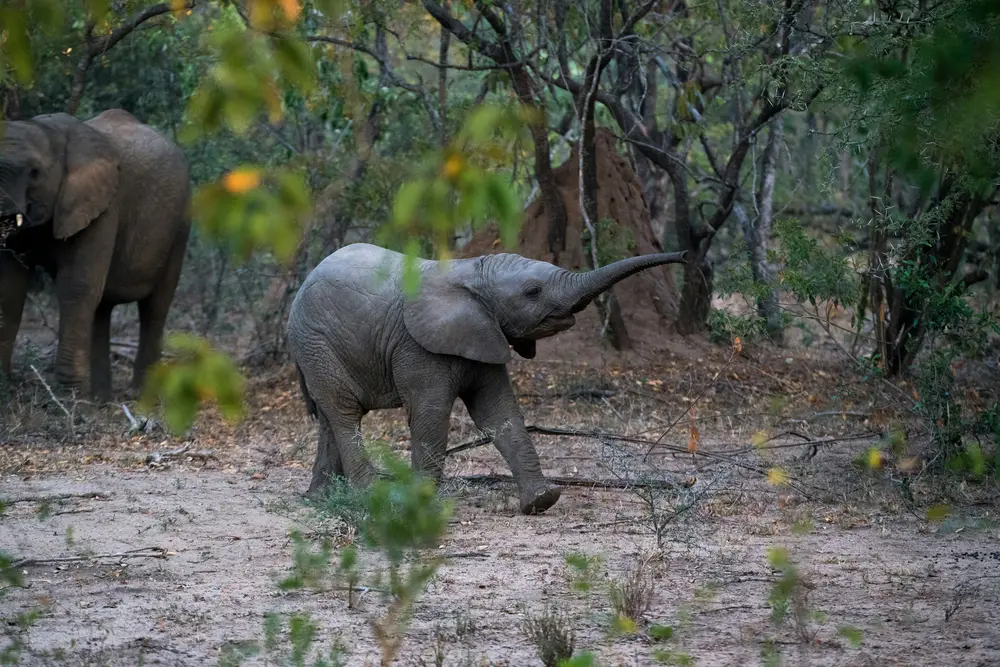
FAQ: African elephant,Loxodonta africana
What is the difference between savannah and forest African elephants?
Savannah elephants are generally larger with more massive tusks and occupy open habitats; forest elephants are smaller, adapted to dense forests, and often have straighter, thinner tusks. Genetic and ecological studies highlight important distinctions.
How does elephant social learning affect conservation?
Social learning transmits migration knowledge, water-source locations, and human-threat avoidance. Losing older individuals can degrade group knowledge and reduce survival or the ability to adapt to change.
Are African elephants endangered?
Status varies regionally. Some populations are endangered or critically threatened due to poaching and habitat loss, while others show recovery with sustained conservation efforts. Refer to IUCN regional assessments for specifics.
How do elephants communicate at long distances?
They use low-frequency infrasound that can travel several kilometres, alongside other vocal and non-vocal signals to coordinate group movements and breeding.
Can conservation actions help restore elephant populations?
Yes. Well-designed protected areas, anti-poaching measures, community engagement, habitat restoration, and demand reduction for ivory have stabilised or increased some populations where consistently applied.
Further reading and related posts: see The Secret Lives of Elephants, 7 Astonishing Animal Lifespans, and Animal Weapons.
